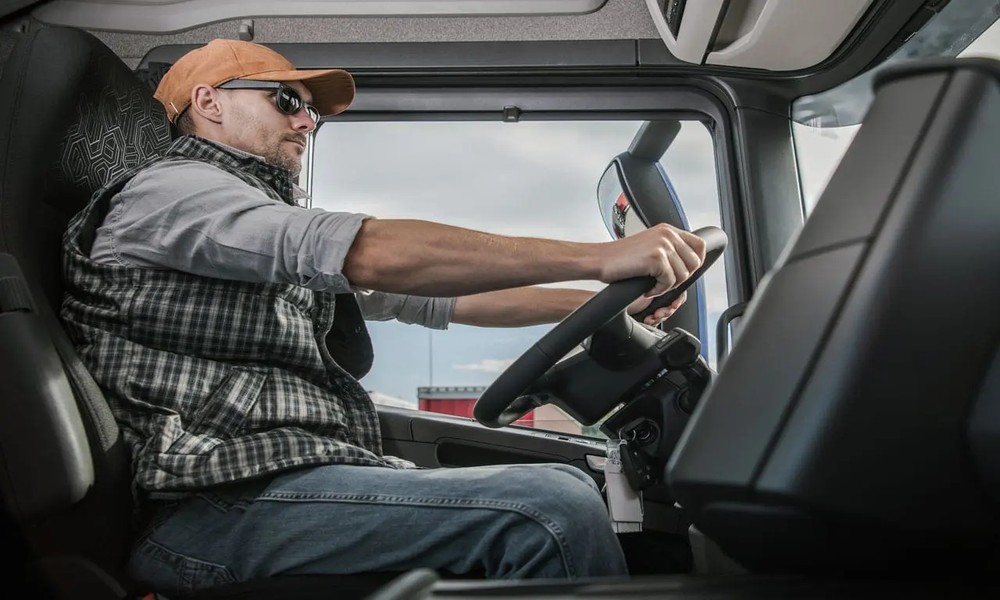
Cheyenne sits at the crossroads of two of the busiest freight corridors in the country. I-80 carries traffic east and west across the southern half of Wyoming, and I-25 runs straight up from Denver into Montana. If you drive a truck through this part of the country, you’ve spent more time in a sleeper berth at the Sapp Bros than you’d care to count. The team at Hometown Chiropractic sees commercial drivers regularly, both for spine care between routes and for DOT physicals through Dr. Walton’s certification. The patterns we see in CDL drivers are consistent enough to be worth talking about openly.
A truck cab is one of the harder environments to spend a working life in. Eight to eleven hours behind the wheel exposes the lumbar spine to a combination of compressive load and low-frequency vibration that almost no other job replicates. NIOSH has flagged whole-body vibration as a contributing factor in chronic back pain across the trucking industry for decades. Add in the awkward angle of climbing in and out of a cab, the constant cervical rotation for mirror checks, and the strain of cranking landing gear or chaining tires in a Wyoming winter, and you have a job that quietly puts every major joint in the spine under stress.
What Long-Distance Driving Does to the Lumbar Spine
A seated posture loads the lumbar discs more heavily than standing does. Studies measuring intradiscal pressure put seated load roughly 40 percent higher than standing for the same person. Hold that load for hours while the suspension transfers road vibration straight into the seat, and the disc tissue starts to fatigue in ways the body has trouble recovering from overnight. Drivers often describe a stiffness that takes thirty minutes of walking to clear after a long pull. That pattern is the spine telling you it didn’t get the recovery time it needed.
Sciatica is one of the most common reasons drivers eventually come in for care. The piriformis muscle, which sits deep in the glute, can compress the sciatic nerve when it shortens from prolonged hip flexion. The pain isn’t always a disc issue. Sometimes it’s a muscle pattern that built up over years of seated work, and that pattern responds well to conservative care.
The Neck and Shoulders Take Their Own Hit
Cervical strain in drivers comes from a different source. Constant mirror checks and shoulder checks build asymmetric movement into the neck. The sternocleidomastoid and the upper trapezius on one side end up working harder than the other. Headaches that start at the base of the skull and travel forward are often coming from this pattern, not from anything happening inside the head itself. Adjustments to the cervical spine, paired with deep-tissue work on the affected muscles, often quiet these headaches faster than medication does.
Shoulder issues show up too. Holding a steering wheel for hours keeps the front of the chest tight and the upper back lengthened in a way it wasn’t designed for. Over years, that posture can produce impingement symptoms in the shoulder that drivers blame on a single injury. The single injury was usually just the moment a long-running pattern finally became symptomatic.
What Chiropractic Care at Hometown Chiropractic Looks Like for Drivers
Care for a CDL driver has to fit the schedule, not the other way around. Visits at Hometown Chiropractic for drivers on the road focus on what can be addressed in a single appointment plus what the driver can carry into the cab as homework. We adjust the lumbar spine, sacrum, and cervical segments where motion is restricted. Austin Bailey provides deep-tissue work on the piriformis, hip flexors, and upper trapezius when soft tissue is part of the picture. We send drivers off with specific stretches and mobility work they can do at fuel stops without needing equipment, plus practical hydration guidance, since dehydrated disc tissue handles vibration worse than well-hydrated tissue does.
Drivers often tell us they assumed back pain was just part of the job. It doesn’t have to be. The same conservative care that helps office workers and ranchers in Laramie County applies to drivers, with adjustments for the specific demands of the cab.
How DOT Physicals Connect to Long-Term Spine Health
A DOT physical isn’t only about blood pressure and vision. The exam covers musculoskeletal conditions that could affect a driver’s ability to operate safely. Drivers with progressing low back pain, sciatica, or cervical issues are sometimes one bad flare away from a certification problem. Catching these patterns early and keeping the spine moving well makes the difference between a routine recertification and a difficult conversation with the medical examiner. Dr. Walton handles DOT physicals at our office, which lets us address both pieces under one roof when that’s what a driver needs. The FMCSA’s medical examiner handbook spells out the conditions examiners look for during certification, and it’s worth a read for any driver who hasn’t reviewed the criteria recently.
Practical Habits That Help Between Visits
A few small changes add up over a long career. Get out of the cab every two hours when the schedule allows. Walk for five minutes, do a few hip flexor stretches against the side of the truck, and roll the shoulders through their full range. A lumbar support pillow that holds the natural curve of the low back makes a real difference over thousands of miles. Hydration matters more than most drivers realize, both for disc health and for circulation in the legs.
Building basic core strength on off-days, even ten or fifteen minutes a few times a week, supports the spine through the hours when you can’t get out and move. Bridges, dead bugs, and bird dogs cover most of what a driver needs without requiring a gym membership.
When to Come In
If pain is interfering with sleep, traveling down a leg or arm, or starting to affect how you do your job, it’s time to get evaluated. Smaller patterns are easier to address than ones that have built up for a decade. Hometown Chiropractic in Cheyenne sees drivers on tight schedules, and we work to get you in and out so you can get back on the road or home to your family. Schedule when you’re routing through town, and we’ll build a plan that fits the realities of your work rather than fighting against them.
Suggested Linking
Internal links worth weaving in once published: the services page, the DOT physicals section under services, the page introducing Austin Bailey and massage therapy, and the meet-the-doctor page for Dr. Walton’s certification details.
External references that add credibility without overloading the post: the NIOSH page on whole-body vibration in occupational settings, and the FMCSA Medical Examiner Handbook for the section on musculoskeletal certification criteria.